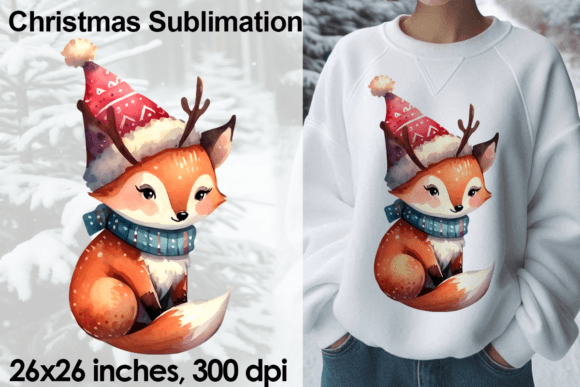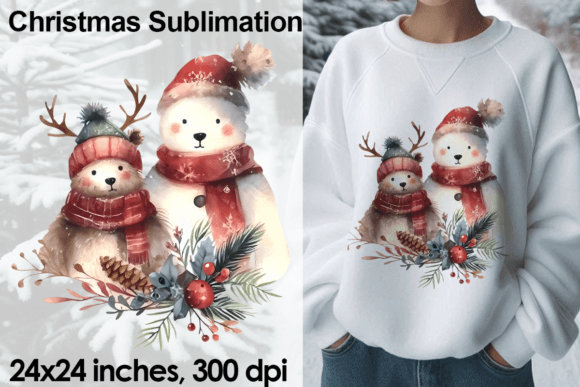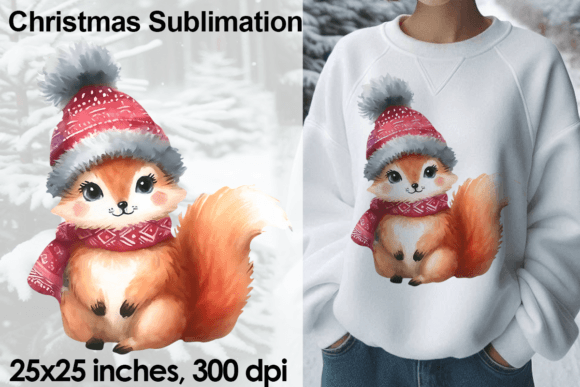
Watercolor Christmas Bear Sublimation
As a designer who spends half my day staring at stitch charts and the other half trying to explain to clients why their favorite logo won’t work on a cap, I don’t look at digital files with just an eye for aesthetics. I look for viability. When Watercolor Christmas Bear Sublimation landed in my inbox, my first thought wasn’t about how cute it was—though it certainly is—but whether it would actually hold up when translated from a soft, pixelated image into thread and fabric.
The world of machine embroidery design is crowded. Every holiday season, the market gets flooded with generic snowflakes and rigid vector reindeer. What I’m always hunting for is something that feels hand-crafted but scalable. This Illustrations piece caught my attention because it leans into the whimsical rather than the traditional. It has that specific "watercolor" bleed effect that suggests softness, which immediately makes me think of nursery decor, boutique baby items, and high-end personalized gifts. But does it translate?
The First Impression: Mood and Visual Personality
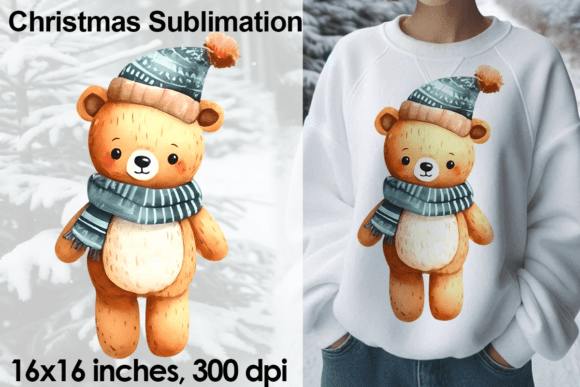
The immediate draw of Watercolor Christmas Bear Sublimation is its emotional resonance. It doesn’t scream "holiday sale"; it whispers "cozy winter evening." The bear isn’t posed stiffly; it feels relaxed, perhaps holding a tiny gift or wearing a subtle festive accessory. For designers, this mood is critical. It shifts the product from a generic commodity to a sentimental item. Customers don’t just buy a tote bag; they buy the feeling of nostalgia and warmth associated with the image.
Visually, the layout is clean. There is enough negative space around the character to allow for versatile placement. Whether you are planning a centered chest logo on a sweatshirt embroidery project or a smaller accent on a kitchen towel, the composition works. The watercolor style implies a lack of harsh lines, which is a double-edged sword in embroidery. It promises beauty but demands technical precision to avoid looking muddy.
Real-World Application: Where This Design Shines
I recently had a client asking for a custom line of holiday merchandise for her Etsy shop. She wanted something that felt artisanal, not mass-produced. Watercolor Christmas Bear Sublimation became the centerpiece of our brainstorming. Here is where I see this design performing exceptionally well in real-life scenarios:
- Baby and Nursery Items: The soft edges and gentle theme make this ideal for baby embroidery. Think onesies, swaddle blankets, or crib mobiles. The watercolor texture mimics the softness of cotton muslin, creating a cohesive tactile experience.
- Holiday Gifts and Personalized Products: This is a powerhouse for personalized gift markets. Imagine a monogrammed tote bag design featuring the bear as a background element, or a set of embroidered tea towels for housewarming presents during the holidays.
- Boutique Branding: For small business owners, consistency is key. Using a unique character like this bear helps establish brand recognition. It’s distinct enough to be memorable but neutral enough to fit various color palettes.
- Apparel Decorators: Beyond sweatshirts, this works beautifully on denim jackets or flannel shirts. The contrast between the rugged fabric and the delicate bear creates a trendy, layered look that appeals to younger demographics.
When I mock this up digitally, I imagine it paired with cream, sage green, or muted red threads. The embroidery file needs to capture the gradient feel of the original art, which brings us to the technical execution.
Technical Execution and Stitch Strategy
This is where many designers trip up. A watercolor image relies on subtle shifts in opacity. In commercial embroidery, we have to mimic these shifts using thread colors and stitch techniques. If you simply trace the outline, you lose the magic. To get that authentic look, you need a thoughtful combination of satin stitch for definition and fill stitch variations to create texture.
I recommend using a multi-layered approach. Start with a lighter base fill, then add darker accents to simulate the watercolor pooling. The running stitch can be used sparingly for whiskers or fine details, but overusing it can make the design look sparse. The key is density management. You want the fabric to show through slightly in the light areas to maintain the airy, painted feel, while keeping the dark areas dense enough to hide the backing.
For those working with digital embroidery file formats, ensure your software allows for color changes that align with these tonal shifts. If the file is too simple, you may need to edit the digitization yourself to achieve the desired artistic effect.
Critical Considerations: Where to Use Caution
No design is perfect for every surface. As much as I love the charm of Watercolor Christmas Bear Sublimation, there are specific contexts where it might struggle. Being realistic about these limitations will save you from unhappy customers and ruined garments.
- Small Hoop Sizes: If you attempt to stitch this in a very small hoop (under 4x4 inches), the watercolor details will compress. Tiny gradients become blobs. Stick to medium to large hoops to preserve the integrity of the shape.
- Textured or Stretchy Fabrics: Avoid applying this to heavy bouclé wool or highly stretchy jersey knits without proper stabilization. The soft curves of the bear can distort on uneven surfaces, making the character look warped. Always use a cut-away stabilizer for knits and a tear-away for wovens.
- Dark Fabrics: While possible, achieving true watercolor tones on black or navy fabric is challenging. You’ll likely need a white underlay or a light-colored base layer, which adds bulk. For dark fabrics, consider simplifying the palette or choosing a higher-contrast version of the design.
- Frequent Washing: If this is for a handmade product like a kitchen towel or apron that sees heavy use, ensure the stitch density is high enough to withstand abrasion. Watercolor styles often have thinner lines that can fray if not anchored properly.
- Curved Surfaces: Embroidering directly onto a curved cap front requires careful hooping. The flat nature of the watercolor style might not wrap well around the curvature of a hat. It’s better suited for flat panels or patches applied to caps.
Final Verdict: Is It Worth Your Time?
After testing various concepts for holiday collections, Watercolor Christmas Bear Sublimation stands out as a versatile, emotionally resonant asset. It bridges the gap between traditional holiday cheer and modern, minimalist aesthetics. For Etsy sellers and craft business owners, it offers a fresh alternative to the usual Santa and reindeer tropes.
However, success depends entirely on your execution. Do not treat this as a "print and stitch" solution. Treat it as a canvas. Test the design on scrap fabric first. Check thread color contrast by viewing it in black and white to ensure the shapes remain distinct. Inspect small details closely—are the eyes clear? Is the outline crisp? Confirm hoop size limitations before committing to a large production run.
If you are willing to put in the effort to digitize or select a high-quality embroidery file that respects the nuances of the watercolor style, this design will elevate your finished product. It signals professionalism and attention to detail, traits that build customer trust and justify premium pricing. For the right maker, Watercolor Christmas Bear Sublimation isn’t just a bear; it’s a bestseller waiting to happen.